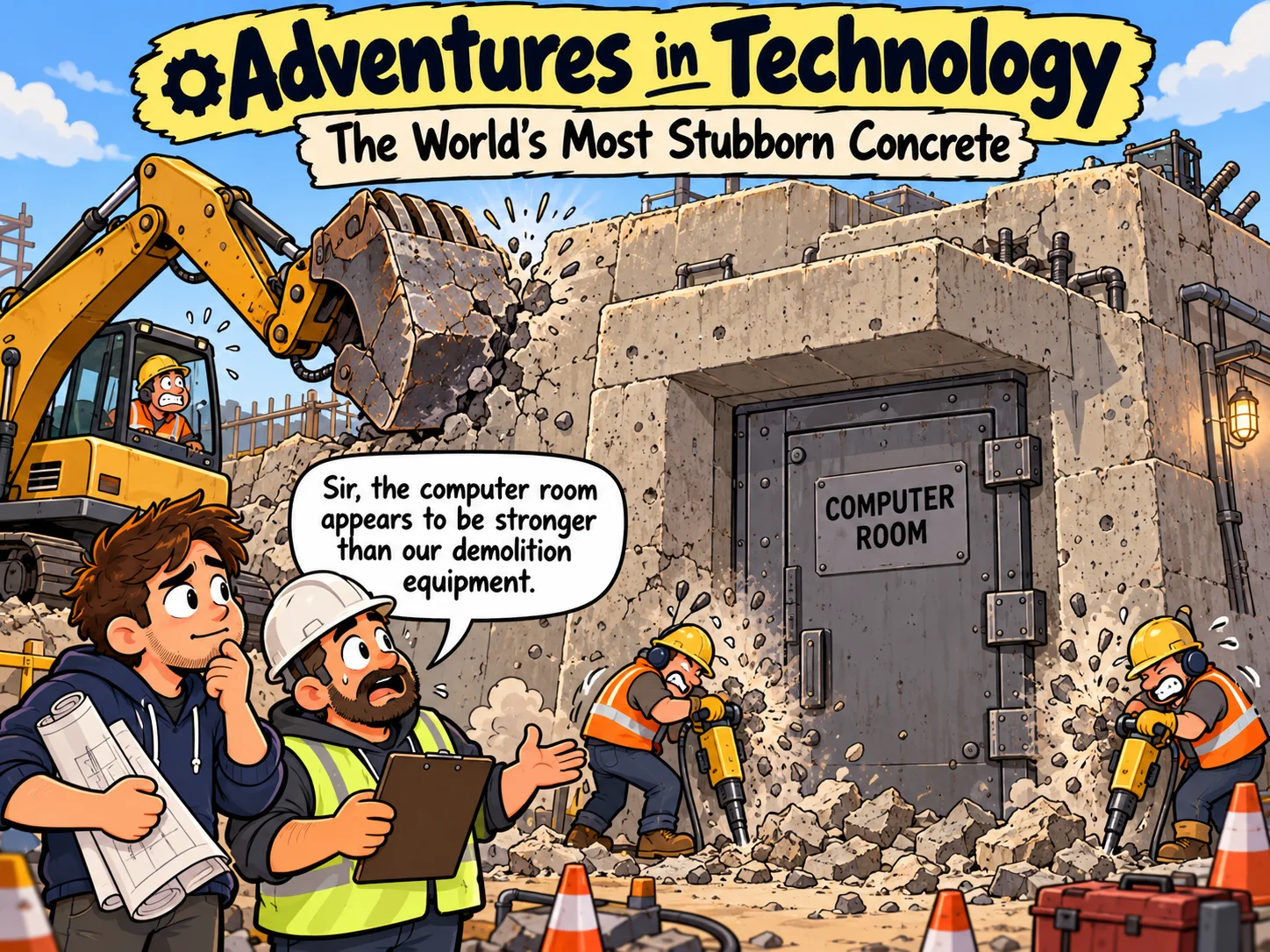
A computer room tougher than the demolition equipment.
Nuclear bunkers are fascinating buildings.
Most structures are designed around ordinary considerations like occupancy, weather, fire protection and affordability.
Cold War bunkers were designed with an entirely different set of assumptions.
Namely, that somebody might try to destroy the place using methods considerably more enthusiastic than a wrecking ball.
This introduces certain complications when the building eventually reaches the end of its useful life.
In our fictional cartoon, a demolition contractor arrives with a collection of impressive machines.
The excavator starts working.
The jackhammers get involved.
The crew develops a healthy respect for reinforced concrete.
After a considerable amount of noise, dust and professional disappointment, the foreman approaches the engineer.
"Sir, we may have a problem."
"What's wrong?"
"The computer room appears to be stronger than our demolition equipment."
"Can we upgrade the equipment?"
"Possibly."
"Can we just leave the room where it is?"
The foreman considers this.
A sign goes up outside.
AVAILABLE FOR COLOCATION. BRING YOUR OWN FIBRE.
And somewhere, a 1990s internet entrepreneur feels an inexplicable sense of vindication.
This is an exaggerated fictional demolition scene, not a factual account of a specific contractor's work.